SUMMARY
Compositions and methods to target long non-coding RNA (lncRNA) from the BRCA1 pseudogene in breast cancer cells to stimulate the body’s natural immune response, leading to increased cancer cell death and tumor suppression.
The Unmet Need: Strategies to utilize endogenous RNAs to induce cancer cell death and antitumor responses
- Breast cancer remains a significant global health challenge, with ongoing efforts to understand the molecular mechanisms driving its progression and resistance to therapy. A critical area of research is the role of genetic and epigenetic factors in tumor development and treatment response. The BRCA1 gene, well-known for its involvement in DNA repair and tumor suppression, has been extensively studied. However, the biological significance of its pseudogene, BRCA1P1, has been largely overlooked, primarily due to the historical view of pseudogenes as non-functional genomic remnants. Recent studies have highlighted the potential regulatory roles of pseudogenes, particularly through the expression of long non-coding RNAs (lncRNAs), which can modulate gene expression and immune responses.
-
Existing approaches to breast cancer treatment, such as chemotherapy and immunotherapy, often face challenges due to tumor resistance and the complex interplay of immune evasion mechanisms. Understanding the functional impact of BRCA1P1 and its lncRNA in regulating immune responses and tumor growth could provide novel insights into overcoming these therapeutic hurdles and improving patient outcomes. Boosting innate immune responses, particularly antiviral mechanisms, is crucial for establishing robust antitumor immunity and improving the efficacy of cancer treatments.
The proposed solution: Targeting the BRCA1 pseudogene for enhanced anti-tumor responses
- The faculty inventor developed methods to target the BRCA1 pseudogene (BRCA1P1) to inhibit cancer progression and enhance therapy responses. It has been discovered that BRCA1P1, previously thought to be non-functional, expresses a long non-coding RNA (lncRNA) that is highly expressed in breast tumors. This lncRNA negatively regulates antiviral gene expression by binding to the NF-κB subunit RelA in the nucleus.
-
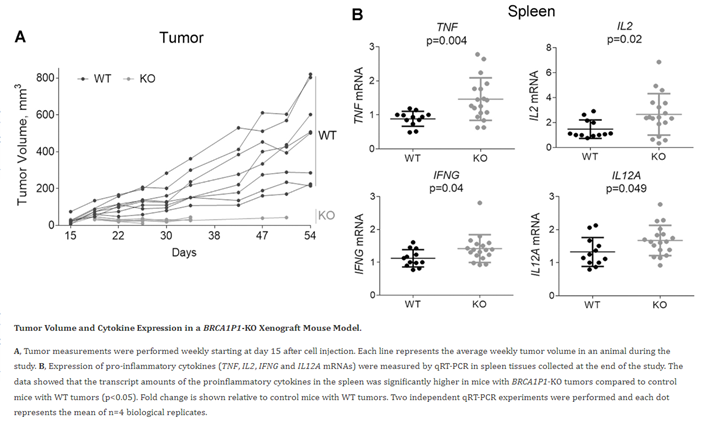
BRCA1P inhibition leads to increased innate immune responses, restricted virus replication, and enhanced cancer cell apoptosis due to reactive oxygen species accumulation and DNA damage. This inhibition also sensitizes cancer cells to chemotherapy drugs like doxorubicin and camptothecin.
FIGURE
ADVANTAGES
ADVANTAGES
- Enhanced antitumor immune responses
- Regulation of innate immunity
- Potential synergy with immunotherapy
- Sensitizes cancer cells to chemotherapy drugs
APPLICATIONS
- Regenerative medicine
- Oncology
- Chemotherapy adjuvant
- Immunotherapy adjuvant
PUBLICATIONS
-
Han YJ, Zhang J, Lee JH, Mason JM, Karginova O, Yoshimatsu TF, Hao Q, Hurley I, Brunet LP, Prat A, Prasanth KV, Gack MU, Olopade OI. The BRCA1 Pseudogene Negatively Regulates Antitumor Responses through Inhibition of Innate Immune Defense Mechanisms. Cancer Res. 2021 Mar 15;81(6):1540-1551. doi: 10.1158/0008-5472.CAN-20-1959. Epub 2021 Jan 20. PMID: 33472891; PMCID: PMC7969461.
September 26, 2024
Proof of concept
Patent Pending
style="display:none">Licensing,Co-development
Olufunmilayo Olopade
- In mouse models, BRCA1P1 depletion stimulates proinflammatory cytokines and suppresses tumor growth, suggesting its potential as a target for novel cancer therapies.