SUMMARY
A method using tumor sequencing data to measure membrane-localized neoantigens, helping predict which cancer patients will benefit from immunotherapy, even those with low tumor mutational burden, improving treatment selection and survival outcomes
The Unmet Need: Improved biomarkers that more accurately reflect the biological mechanisms underlying effective anti-tumor immune responses
- Immunotherapy, particularly the use of immune checkpoint inhibitors (ICIs), has revolutionized the treatment of various cancers by harnessing the body’s immune system to target and destroy tumor cells. Despite its transformative potential, only a subset of patients experiences significant and durable responses to these therapies. The field has therefore focused on identifying reliable biomarkers that can predict which patients are most likely to benefit from ICIs. Tumor mutational burden (TMB) has emerged as one such biomarker, based on the premise that tumors with more mutations generate more neoantigens, increasing the likelihood of immune recognition. However, the predictive power of TMB is limited, as many patients with high TMB do not respond to ICIs, while some with low TMB do benefit. This has highlighted the urgent need for more precise and mechanistically relevant biomarkers to optimize patient selection and improve clinical outcomes.
-
Current approaches to predicting immunotherapy response, such as TMB and PD-L1 expression, suffer from several critical limitations. TMB, while useful, captures only the quantity of mutations and not their immunogenic quality or accessibility to immune surveillance. It does not account for the subcellular localization of neoantigens, which can influence how effectively the immune system recognizes and attacks tumor cells. Furthermore, TMB-based selection may exclude patients with low mutation rates who could still benefit from ICIs due to other factors enhancing tumor immunogenicity. PD-L1 expression, another commonly used biomarker, is subject to variability in testing methods and tumor heterogeneity, leading to inconsistent predictive value. As a result, many patients are either inappropriately excluded from potentially life-saving therapies or exposed to ineffective treatments with significant side effects and costs.
The Proposed Solution: A method to predict cancer immunotherapy response by quantifying membrane-localized antigens from tumor sequencing data
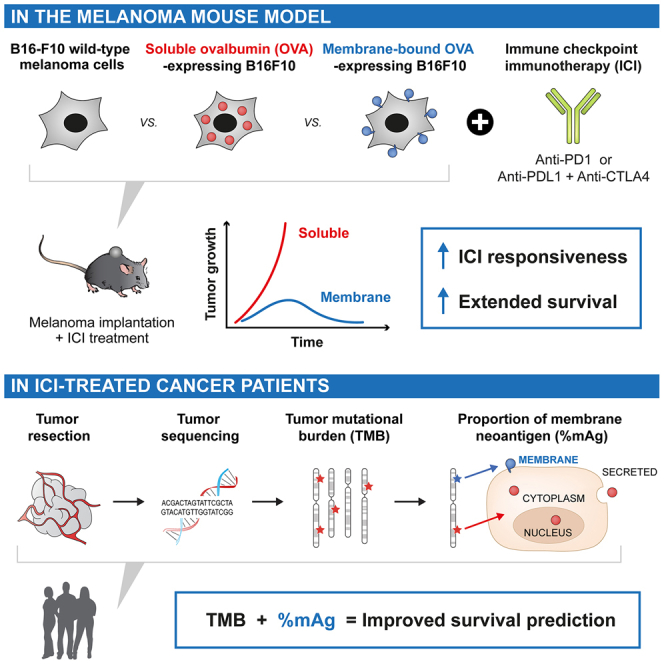
- The faculty inventor developed a precision oncology solution for optimizing cancer immunotherapy by leveraging the subcellular localization of tumor neoantigens as a predictive biomarker. Specifically, it involves analyzing a patient’s tumor sequencing data to determine the proportion of mutated genes encoding membrane-localized antigens (mAgs). The workflow includes identifying somatic mutations, mapping them to their protein products, annotating subcellular localization, and calculating the fraction of mutations that are membrane-associated. A high mAg proportion in a tumor sample predicts improved responsiveness to immune checkpoint inhibitors (ICIs) and better overall survival, independent of traditional markers such as tumor mutational burden (TMB).
-
This approach can be seamlessly integrated into existing clinical sequencing pipelines, enabling clinicians to more accurately identify patients-especially those with low TMB-who are likely to benefit from immunotherapy. Additionally, the technology highlights specific mutated membrane proteins as potential individual biomarkers and supports the rational design of personalized cancer vaccines.
FIGURE
ADVANTAGES
ADVANTAGES
-
Improves prediction of patient response to immune checkpoint inhibitor (ICI) therapy beyond traditional biomarkers like tumor mutational burden (TMB)
-
Identifies patients with low TMB who are likely to benefit from immunotherapy, expanding treatment eligibility
-
Correlates a high proportion of membrane-localized neoantigens (mAgs) with enhanced anti-tumor immune responses and better overall survival
-
Utilizes existing tumor sequencing data without requiring additional laboratory tests, facilitating easy clinical integration
-
Provides a mechanistically grounded biomarker based on the immunogenicity of membrane-localized proteins, validated across multiple cancer types and ICI regimens.
-
Enables refined patient stratification and improved survival prediction when combined with TMB analysis
APPLICATIONS
-
Predicting immunotherapy response in cancer
-
Refining patient selection for ICIs
-
Personalized cancer vaccine design
-
Improving survival prediction in oncology
PUBLICATIONS
-
Goldberger Z, Hauert S, Chang K, Kurtanich T, Alpar AT, Repond G, Wang Y, Gomes S, Krishnakumar R, Siddarth P, Swartz MA, Hubbell JA, Briquez PS. Membrane-localized neoantigens predict the efficacy of cancer immunotherapy. Cell Rep Med. 2023 Aug 15;4(8):101145. doi: 10.1016/j.xcrm.2023.101145. Epub 2023 Aug 7. PMID: 37552990; PMCID: PMC10439248.
February 18, 2026
Proof of concept
Patent Pending
Licensing,Co-development
Jeffrey Hubbell
- Preclinical models and large-scale human data demonstrate that membrane proteins generate more potent MHC class I epitopes, leading to enhanced immune recognition.